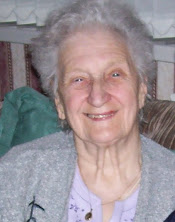
When your loved one goes into a Care Home you have three choices:-
Option One: Respite - this can be a length of time up to a maximum of 12 weeks. Your loved one's home is secure as he/she will be returning to it. Your loved one may be asked to pay for their stay. It will be up to the relevant Trust to decide, in each case, whether to make an assessment of your loved one's means. Where no assessment is made the charge for care is an amount which appears reasonable to the Trust.
Option Two: Temporary - your loved one can stay in a Care Home for up to 52 weeks (in some exceptional cases) longer. This will safe-guard their home and the relevant Trust cannot take it into consideration, for at least a year, when working out how much your loved one should pay towards costs of care. By this time your loved one may have passed away, like my mum, and her home, as she had always wanted was divided between her offspring.
Option Three: Permanent - your loved one is there to stay. The Trust will, after approx. four weeks ring, as they did with us and ask 'what is happening to the house'. They will pressurise you into putting it on the market for sale in order that they can lay claim to monies from the sale. It was at this point that I did loads of research and also contacted various organisations, Age Concern, The Alzheimers Society, Dementia Support and the Law Centre in Belfast (The Law Centre cannot be contacted directly - get their number via The Alzheimers Society). We didn't want mum to be permanent but were told that if she was in a care/nursing/residential home for more than twelve weeks that is what she would be. This is incorrect. The Law Centre gave me details of Government Guidance (as below) and I got mum classed as 'temporary'.
I would urge everybody, whether or not you believe your loved one is going to stay permanently in a Care Home, to go for Option 2. This will give you time to think how best to go forward.
When you are asked to sign finance forms you will notice that there are only two categories on the form - respite and permanent. Stick to your guns and ask for a temporary placement of over 12 weeks. Make your own box on the finance form, place a tick in it and print the word 'temporary'. Sign the form. It was appalling what I and my family were put through to get mum classified as temporary.
Look up:-
CHARGING FOR RESIDENTIAL ACCOMMODATION GUIDE
(CRAG) Amended Text May 2006
"Who is a temporary resident?
Section 3.001
The definition of temporary resident allows the Trust to regard a person's stay as temporary if it is likely to last for any period not exceeding 52 weeks, or, in exceptional circumstances, is unlikely to substantially exceed 52 weeks".
Your loved one's mortgage repayments/insurance policies/heating costs can and should be taken into consideration when the Trust is working out what your loved one should pay towards care. At first I was told commitments for mum's home could not be taken into consideration BUT THEY CAN, quote the above Guidance, Section as below:-
Income Support/Pension Credit and Housing Benefit may not meet the full cost of
continuing home commitments. Where there are extra costs, disregard such
additional amount as appears reasonable. Extra costs might be:
- a fixed heating charge;
- mortgage payment/rent not met by Income Support/Housing Benefit
- service charges not met by Income Support/Housing Benefit
- insurance premiums
Schedule 3 para. 27
Again I was told that the above could not be taken into consideration, with much letter writing, telephone calls and the strength of the Law Centre behind me we got this rectified and mum's home commitments were taken into consideration when calculating her monthly payment for care.
At some stage in these financial proceedings you will also be sent several forms requesting financial information i.e does your loved one own property, land, have they savings etc. One of which will be a general disclosure form. You will be asked to sign this form in order that it will sit in your loved one's records so that the trust can at any time, approach your loved one's bank, building society or other financial organisation to get information on their financial affairs. DO NOT SIGN THIS FORM. Write a letter (see sample letter on sidebar of this blog) stating that you are unhappy about giving general disclosure because you strongly disagree with holding such an important 'signed' form on file. Say that you have no objection to contacting the various organisations regarding disclosure on an as and when it's needed basis . State that you are keen to protect your loved one's privacy and ensure there are measures in place to ensure that it is only interfered with when necessary.
If you believe that your loved one should be in a nursing/residential/care home for health reasons and not there for social needs- fight this too. We believed that mum should have been classed as health care needs under Article 7 of the Health and Personal Social Services (NI) Order 1972 and not social care and were taking the matter to litigation. Unfortunately mum died early on in the process and the Judge, rightly or wrongly, made the decision not to take the matter forward. This was a great disappointment to us as not only were we fighting for mum but all those other residents in the nursing/care/residential home system - many of whom we saw with our own eyes who should have been classed as health care and not social.
We fought all the way for mum and have absolutely no regrets, we loved and adored her and she us and if only she knew how we fought, not only to get her the best care but to make sure she retained her home.
It's a sad indictment of the 21st century that the elderly have to give up everything they worked hard for and earned to satisfy the needs of bureaucrats. Familes should not have the added burden of worrying about selling the family home in order to accommodate their loved one(s) in the care home system. I believe all residents should be accommodated in residential/nursing or care homes free of charge.
(1) Within each Health Care Trust how many older people discharged from hospital to:-(a) nursing homes (b) residential homes were accommodated under:- Articles 4(a) & 7 of the Health & Personal Social Services (NI) Order 1972 in 2006/2007 and 2007/2008?:-
(2) Can you detail the number of people within each Trust area whose care in residential and nursing homes is funded by the Trust under their continuing health care obligation?
(3) Can you detail the number of people within each Trust area living in residential care who have made complaints about having to pay for care in 2006/2007 and 2007/2008?
During Question Time the relevent Minister in charge of Health could not supply answers as records were not held centrally - this did not surprise me as I continually came across inefficiency and lack of record keeping within the Trust associated with mum's care. Her MP then wrote to all the individual Trusts and sent me the replies. I WAS DEEPLY SADDENED AND NOT SURPRISED by them. One or two avoided a direct answer. Reading between the lines I believe they do NOT pay for care. Of those who did supply a direct answer, NONE pay for care.If you wish to receive ANY information from any Health Care Trust, or indeed any organisation, you can do so by writing or e-mailing them under the Freedom of Information Act 2000.
Precious Memories - Rest in Peace Mum
A loving daughter
Free Website Directory